1. Length times width times depth, in feet, then divide by 27
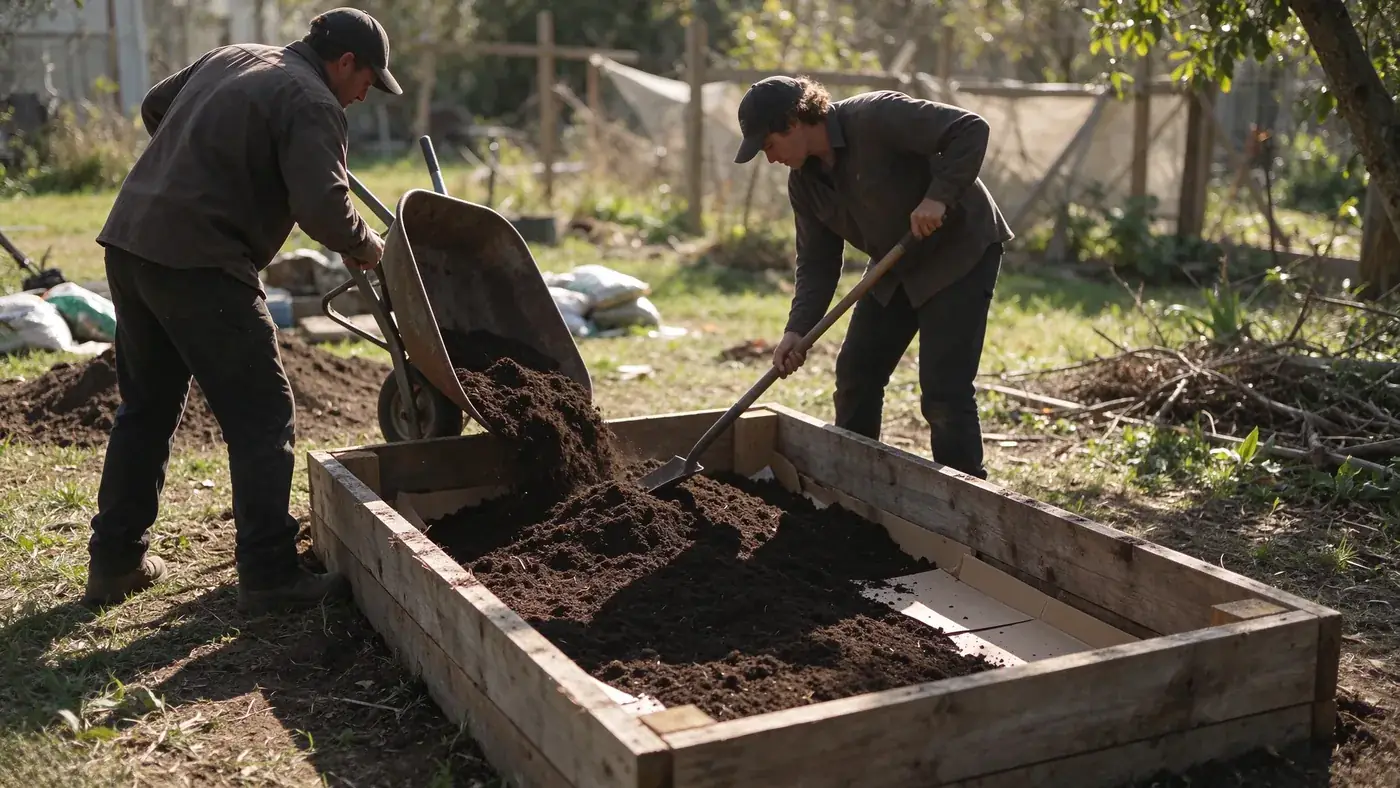
A raised bed is a box, so its soil is a volume. Work in feet, multiply all three dimensions, and you have cubic feet. Convert to cubic yards — the unit bulk soil is sold in — by dividing by 27.
A 4 × 8 bed at 12 inches deep is 4 × 8 × 1 = 32 cubic feet, which is 1.19 cubic yards. Drop the depth to 6 inches and it is 16 cubic feet, or 0.59 cubic yards. That is the whole calculation; everything else in this guide is about the number being wrong in practice.
| Bed | Depth | Cubic feet | Cubic yards |
|---|---|---|---|
| 4 × 4 | 12 in | 16 | 0.59 |
| 4 × 8 | 12 in | 32 | 1.19 |
| 4 × 8 | 6 in | 16 | 0.59 |
| 4 × 8 | 18 in | 48 | 1.78 |
| 4 × 12 | 12 in | 48 | 1.78 |
| 2.4 × 1.2 m | 0.3 m | 30.5 | 1.13 |
If your measurements are in metres, one cubic metre is 35.3 cubic feet, so a 2.4 × 1.2 × 0.3 bed is 0.86 cubic metres and 1.13 cubic yards. Bulk soil yards are the same size everywhere; only the label changes.
2. Do not fill the box to the rim
The rim is not the fill line. Leave 2 inches of freeboard so that water, mulch and a shovel have somewhere to go. On a 4 × 8 bed that is 32 square feet losing a sixth of its depth: 26.7 cubic feet instead of 32, a 17 percent reduction that most people never account for.
Two inches also matters for another reason. Soil settles, and a full-to-the-top bed settles into a bed that looks neglected by August. Filling 2 inches short and topping up later is the normal rhythm of a raised bed, not a failure.
3. Settling means buying 15 percent more than the geometry
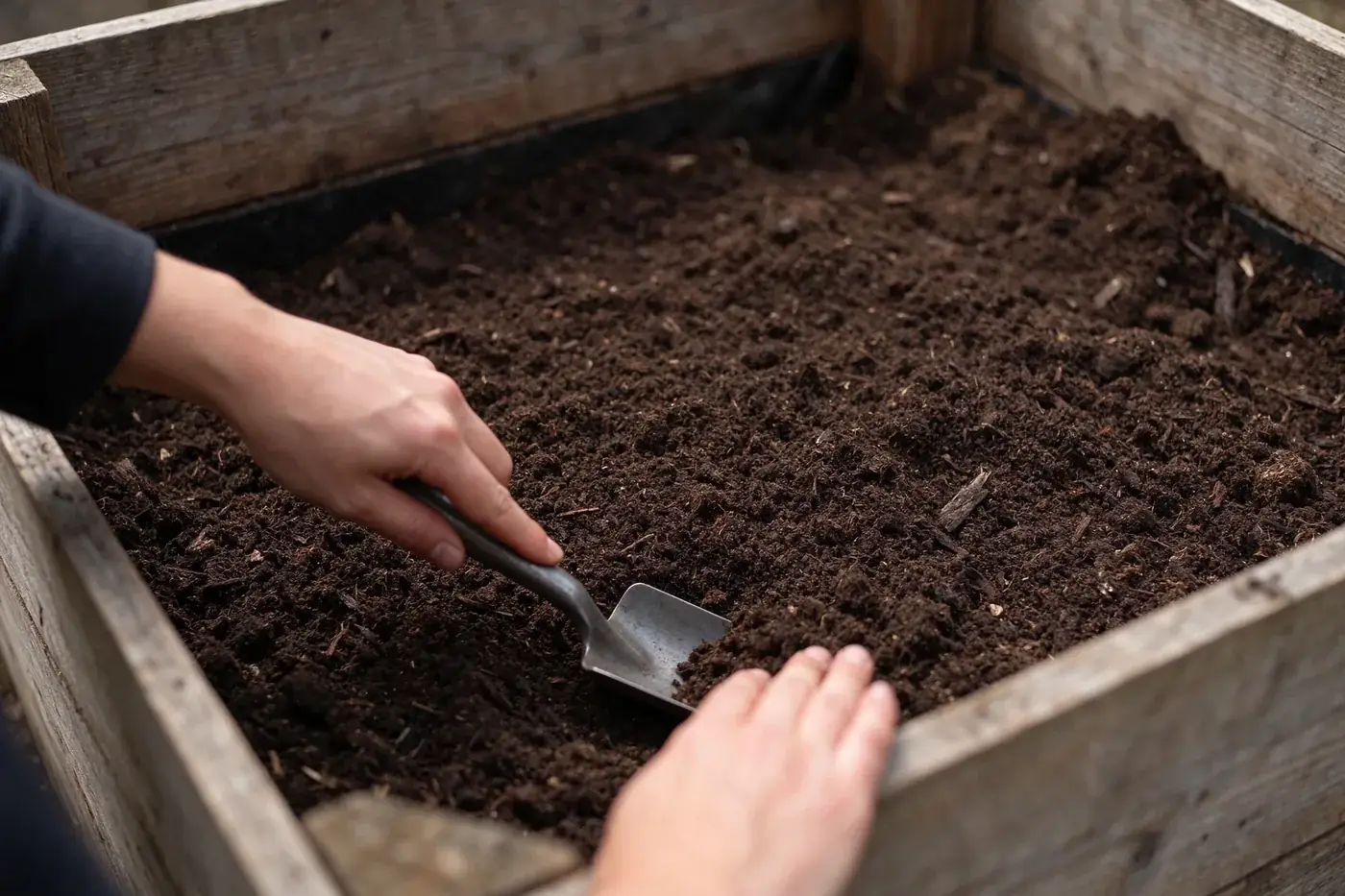
Fresh bagged mix is fluffy. It is mostly air by volume when it leaves the pallet, and it collapses 10 to 20 percent over the first season as water moves through it and the organic fraction decomposes. A 4 × 8 × 12 bed that measures 32 cubic feet will want 36 to 38 cubic feet of material to end up looking full.
That is why the number on the receipt is always bigger than the number on the calculator. Budget a 15 percent settling allowance on top of the geometry, and buy the extra at the same time as the first load — matching a bulk soil pile six months later is not possible.
4. Bags or a bulk load: where the break-even sits
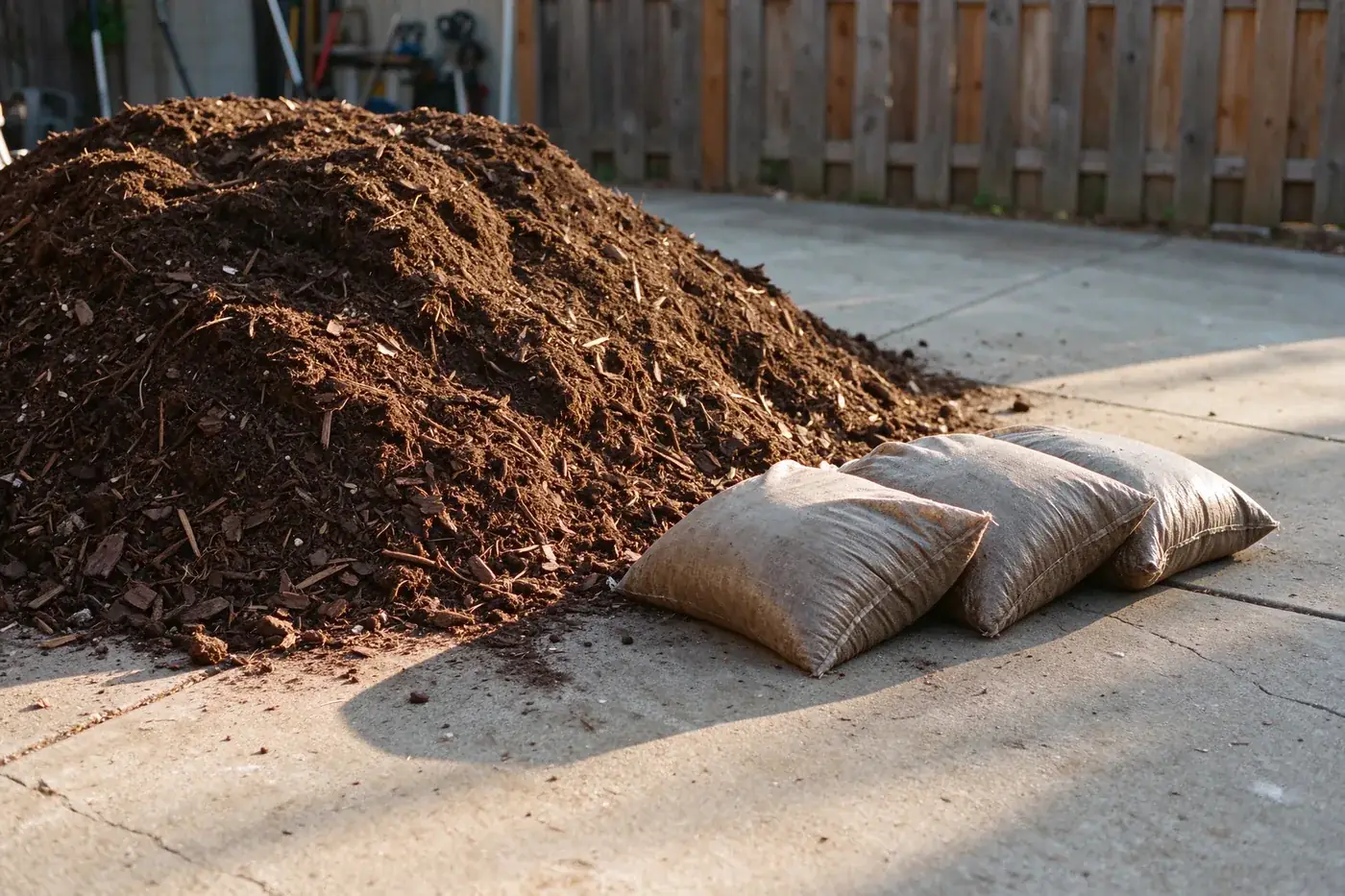
Bagged soil is convenient and expensive. A 2 cubic foot bag at $4.50 is $2.25 per cubic foot; a cubic yard bought loose at $45 is $1.67 per cubic foot, before delivery. On a 4 × 8 bed the bag route is 16 bags, or $72; the bulk route is 1.25 yards, or about $56 worth of soil plus a delivery charge that is usually $40 to $60.
| Route | Quantity for 32 cu ft | Cost | When it wins |
|---|---|---|---|
| 2 cu ft bags | 16 bags | $72 | One bed, no driveway access |
| 1.5 cu ft bags | 22 bags | $88 | Never on price, only on availability |
| Bulk by the yard | 1.25 yd³ | $56 + $40 delivery | Two beds or more, or any driveway |
| Bulk, picked up yourself | 1.25 yd³ | $56 | You have a trailer and a Saturday |
The break-even is roughly 1.5 cubic yards. Below it, bags are cheaper once delivery is counted. Above it, bulk wins by a wide margin — three beds and you are saving the price of a fourth.
5. What actually goes in the box
Raised bed soil is not garden soil and it is not potting mix. Garden soil straight from the ground compacts into a brick in a box; potting mix is too light and burns down to nothing in a season.
The mix that works is roughly 60 percent topsoil, 30 percent compost, 10 percent drainage — coarse sand, pine bark fines or perlite depending on what your supplier carries. Many yards sell this pre-blended as "raised bed mix", which is worth the small premium because it is screened and consistently textured.
Do not put a gravel layer in the bottom. It does not drain a raised bed; it creates a capillary break that keeps the soil above it wetter than it would otherwise be. The bed drains through its own open bottom and the ground beneath it.
6. The order for one 4 × 8 bed
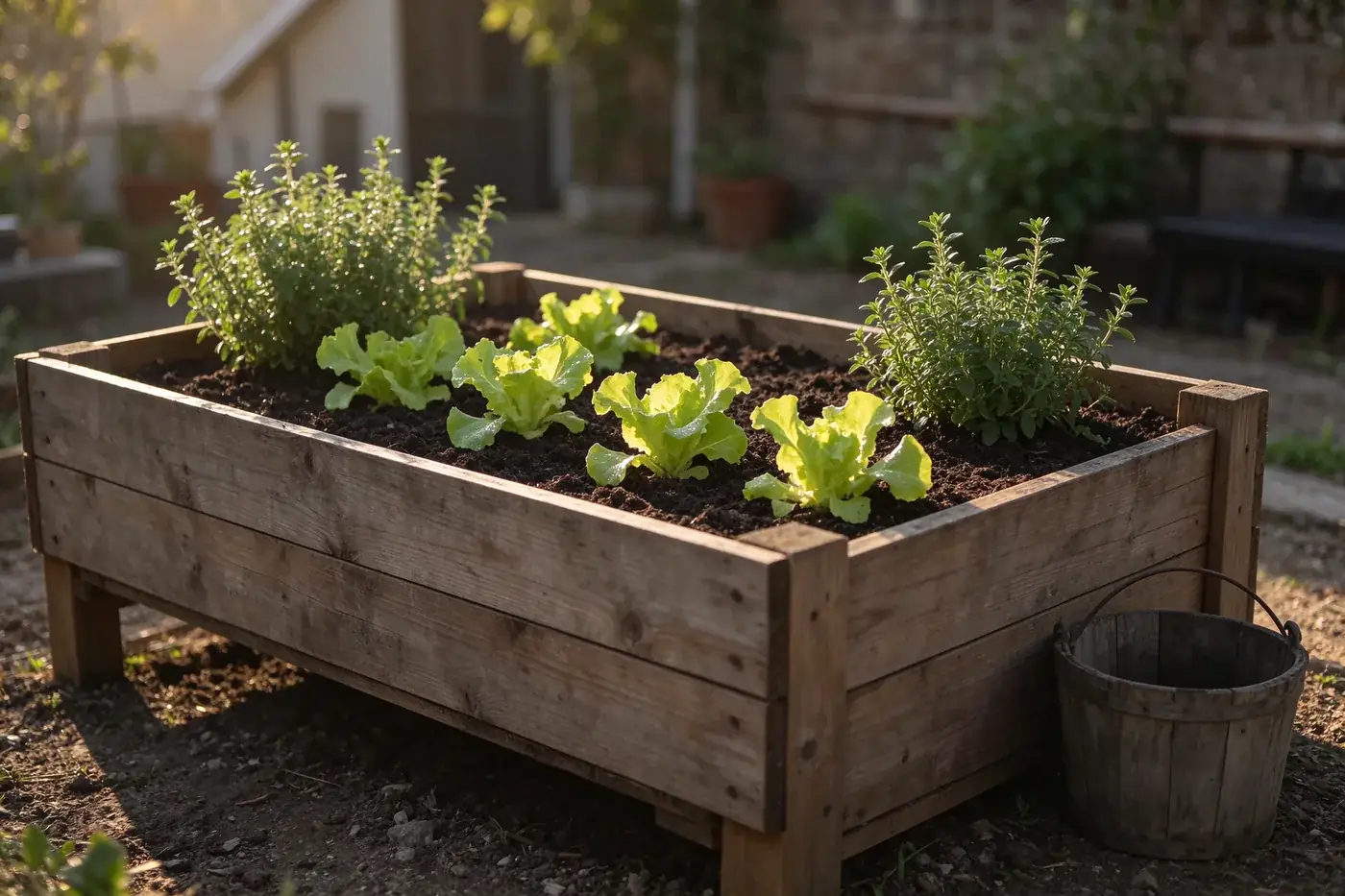
One 4 × 8 bed, filled to 2 inches below the rim, with settling allowance included:
- 32 cubic feet of geometry, minus the 2 inch freeboard → 26.7 cubic feet
- Plus 15 percent settling → 30.7 cubic feet, call it 31 cubic feet
- 16 bags of 2 cubic foot raised bed mix at $4.50 → $72, with two bags held back for the August top-up
- Or 1.25 cubic yards bulk at $45 a yard plus delivery, if you are filling two beds
- No gravel, no landscape fabric under the soil, no rocks in the bottom
Half a yard of difference is easy to lose between the calculator and the driveway. Measure the inside of the box, not the outside, and measure the actual soil depth you intend to use rather than the height of the boards.